2002
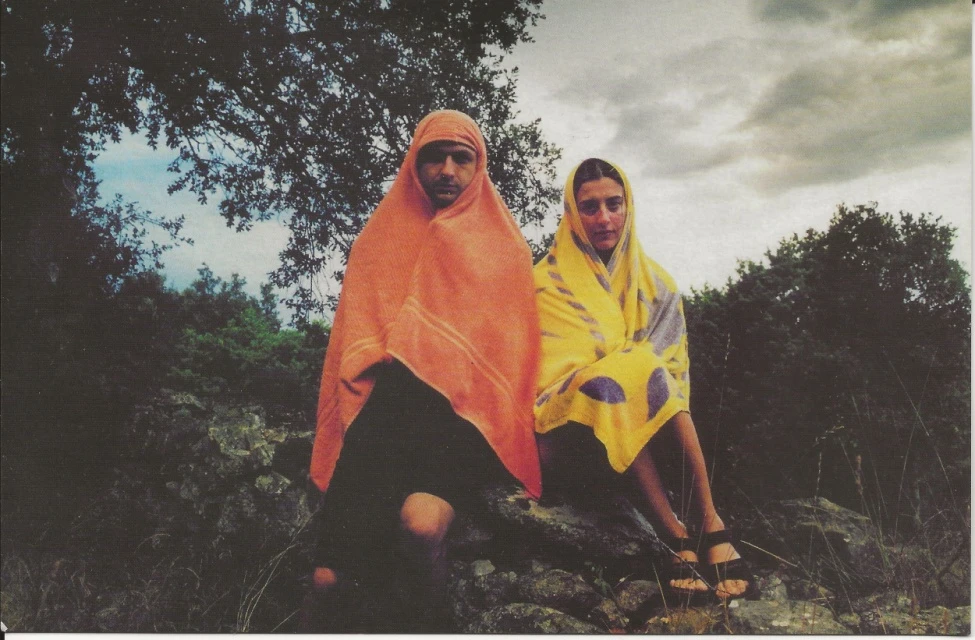
2005-2008
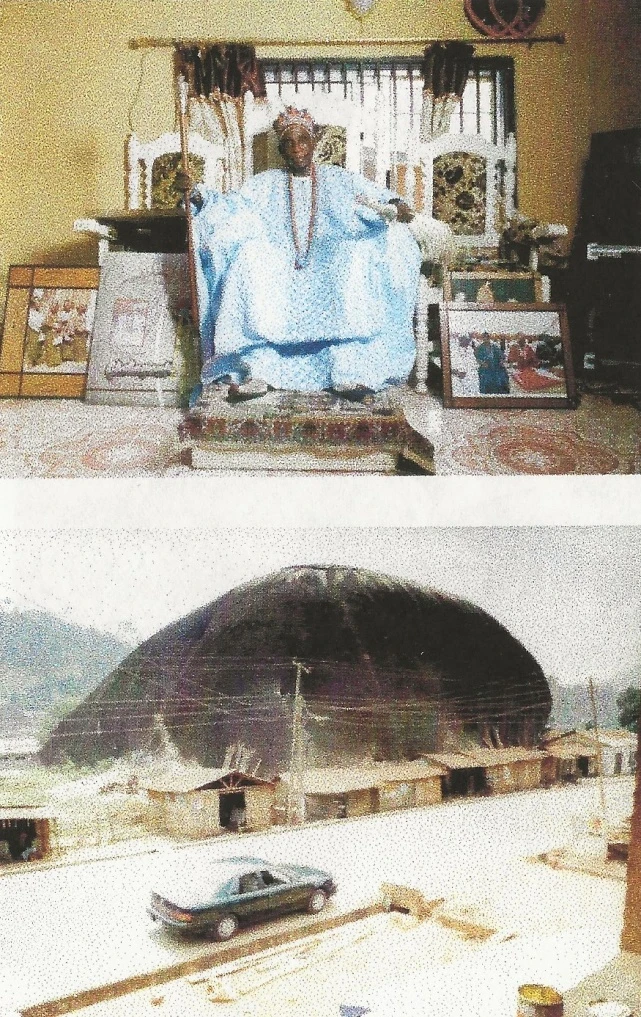
2010
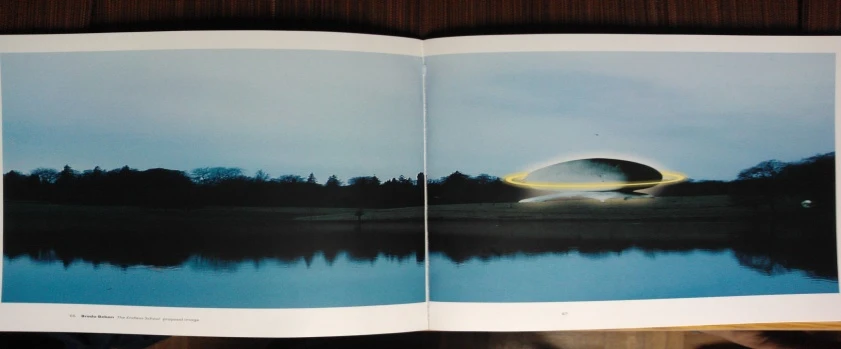
IMAGINARY BALKANS
2002
Imaginary Balkans was a group exhibition which was on show at Site Gallery, Sheffield (2002); Cornerhouse, Manchester and at the Stills Gallery, Edinburgh (2003).
“Starting from Beban’s own intimate knowledge of the political and cultural history of former Yugoslavia, she returned to select work from artists from both sides of the divide. Unable herself to deal with the antagonisms created by the recent unrest and the situation faced now by the two nationalities, the selection of work from Zagreb and Belgrade for Imaginary Balkans expresses her own personal reflection on this emotional and turbulent territory” (quote from the catalogue, Sheffield, 2003).
Artists: Tanja Dabo, Igor Grubić, Vladimir Martek, Zoran Naskovski, Vladimir Nikolić, Mladen Stilinović, Dragana Žarevac.
The exhibition features in Themes in Contemporary Art edited by Gill Perry and Paul Wood (Yale University Press, 2005).
“…Nonetheless, there is something playful about the piece which reminds me of the comment made by Breda Beban, artist and curator from former Yugoslavia, about the “Imaginary Balkans exhibition (which she curated). ‘Most of the work in the exhibition is about tracking down a sense of joy’, she reflected, ‘but this is the kind of joy informed by sadness, a complex kind of joy’….” quote from: “Is ‘Refugee Art’ Possible? By Alex Rotas in 2004.
IMAGINE ART AFTER
2005-2008
The project imagine art after (IAA) is a multi-stage project that puts the creative process at its heart to tell stories that official narratives and histories are unable to tell.
It explores the artistic relations between artists who are based in London and have gained or are seeking refugee status in the UK, and people in the countries they have left behind.
Participants originally come from one of the countries that, according to the Home Office, submit the most applications for asylum in the UK: Afghanistan, Albania, Algeria, Angola, Bangladesh, Burundi, China, Colombia, Congo-Brazzaville, Democratic Republic of Congo, Eritrea, Ethiopia, India, Iran, Iraq, Jamaica, Liberia, Moldova, Nepal, Nigeria, Pakistan, Romania, Rwanda, Serbia and Montenegro, Sierra Leone, Somalia, Sri Lanka, Sudan, Turkey, Uganda, Vietnam, and Zimbabwe.
IAA’s first edition started online with dialogues hosted by Guardian Unlimited in 2005 between migrant artists based in the UK and their compatriots who stayed in their countries of origin.
Following the dialogues, IAA supported the artists in developing and producing new work, which resulted in an exhibition at Tate Britain (October 2007–January 2008). The countries involved were: Afghanistan, Albania, Ethiopia, Iran, Iraq, Nigeria, and Serbia. The artists were: Muyiwa Osifuye, Nigeria; Addisalem Bizuwork, Etiopia; Senayt Samuel, Eritrea; Estabrak, Iraq; Denis Hyka and Violana Murataj, Albania.
The second edition of the project started in 2009, but was put on indefinite hold as Breda Beban was unable to continue.
THE ENDLESS SCHOOL
2010
The Endless School was a proposal for a utopian institution integrating a wide range of disciplines to explore new value systems for a fresh approach to human comfort and happiness. Physically realised through research and an architectural model-cum-sculpture, the work served as a proposal centred on what is essential to our everyday lives, survival, and progress. Aiming to invest science and technology with poetic intuition and personal expression, the school marks a transition from an old knowledge-based society to a new creative-based one. In its physical manifestation, developed alongside architect Will McLean, the project took the form of a doll's house—a model of the school itself and a self-similar fragment of a pedagogic proposition. The resulting piece was an ellipsoid conic vessel, fabricated from plywood and skinned in exotic veneers, that served as both a desk and a motif for an Ark of ideas. The project was exhibited at the Tatton Park Biennial in 2010.
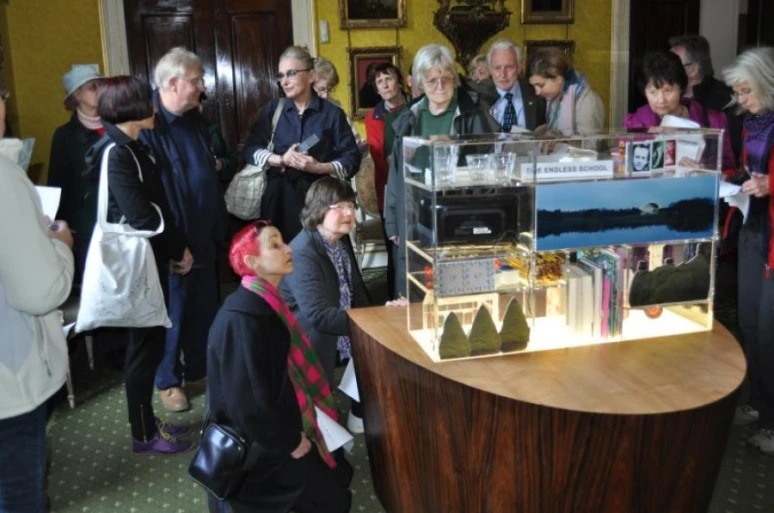
“The Endless School centres on what is essential to our everyday lives, our survival, and our progress. Aiming to invest science and technology with poetic intuition and personal expression, the school creates a transition from the old knowledge-based society to the new creative-based society, reaching a state of maturity that allows us all to gain a ‘return on investment’ from our mistakes.
The culture of the school will transmit a sense of freedom: to think, to be active rather than passive, to recreate the world, and to work with a sense of urgency in understanding that WE ARE AT HOME IN A SPECIFIC PLACE as well as IN THE UNIVERSE. Not afraid to ask the fundamental metaphysical question ‘Where do we come from, and where are we going?’, The Endless School seeks an interdisciplinary and multidimensional way of thinking—one which insists on ‘correlation’ rather than ‘segregation’, as through relatedness we can be more, give more, play more, and enjoy more.
Because this is not a school of illusion, but a school of real place; not a school of isolation, but a school of participation; not a school of indoctrination, but a school of inspiration, the concept for the school building represents a move towards an environmental condition of architecture.
Learning from Austrian-American architect Frederick Kiesler, The Endless School presents an architectural proposition of single, universal surfaces. The grand ellipsoid object—at once prehistoric and sci-fi—sits atop the reformed landscape adjacent to a lake at Tatton Park, crowned by a luminescent halo of giant proportions in homage to the English architect Cedric Price and his project of beneficial change. The halo is an elliptical circulatory device, circumnavigating the ovoid skin and connecting visitors with its amphitheatrical heart through a series of transparent bridges, whilst accumulating sunlight by day and emitting a solar glow by night.
The main structure will contain workshops, kitchens, studios, plant nurseries, and other incubatory environments. Sustenance and libation will be centrally positioned—both theoretically and physically within the structure—as a model of a self-sustaining community and social delight. Beneath the ovoid structural skin, a partially reflected geometry creates a semi-buried dome containing living accommodation as well as pedestrian and vehicular access. The living quarters are an essential component of The Endless School and demonstrably illustrate new models of human comfort, both psychrometrically and psychologically. At once an operational entity and an operational model, the school tests and explores new social relations, construction methods, and material compositions.”
*Quote from Breda Beban’s presentation of the project at the Continental Breakfast Forum in Venice, 2011.